
Ferociously Ridden
Forced World Views and Unbalanced Contradictions

Ferociously Ridden
By the world
By the creatures
By transformations never demanded.
Savagely torn
By the Hunger
By the Anger
By no hiss of healing forever chiming.
Devastation Angels
(Its all your fault)
Sharp right angles
(Hanging from rock)
By the haunting delivering an ending.
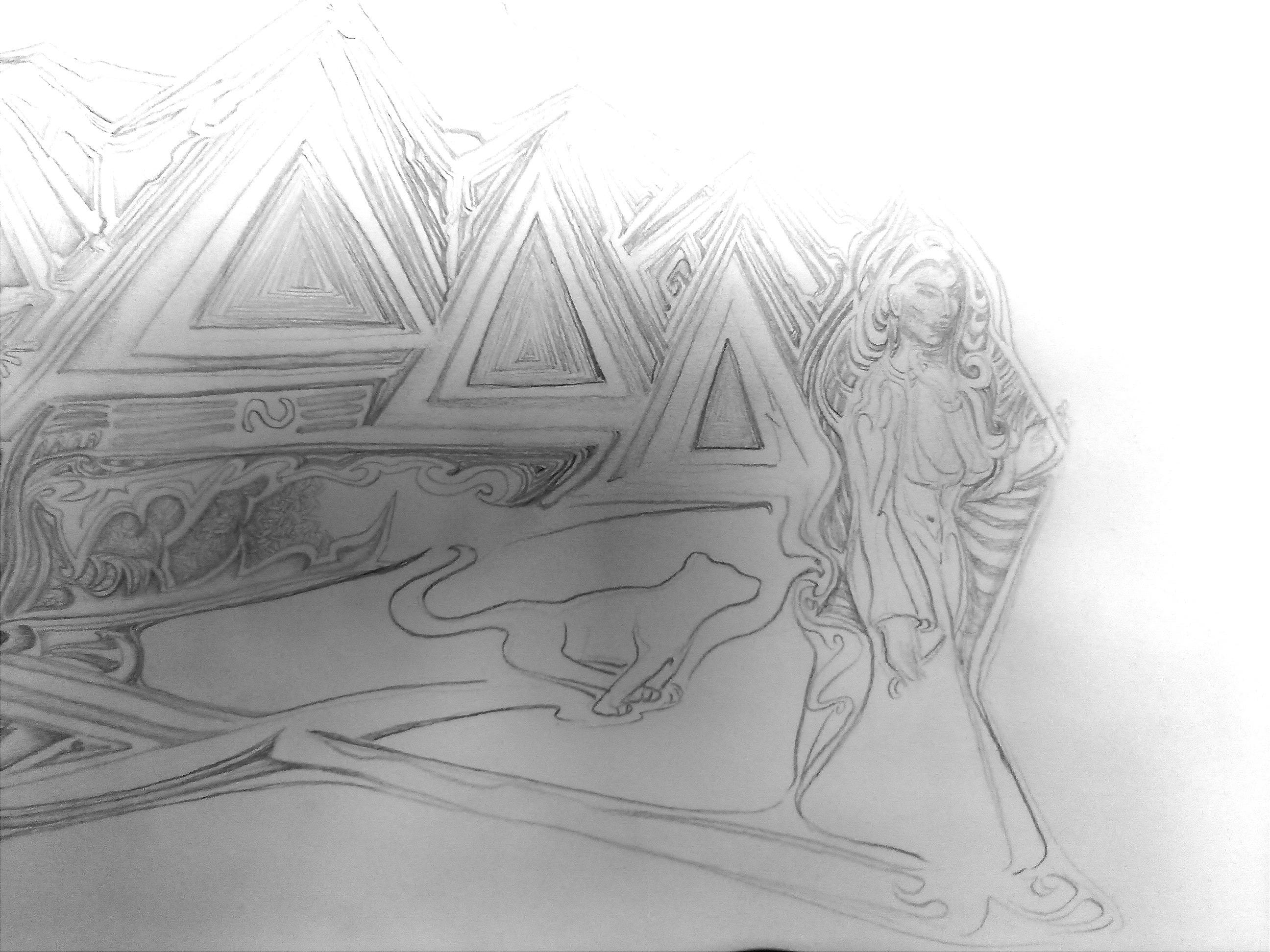
There are those who tell you that they understand Baldur, sum him up in a few sentences and call it done. A mysterious figure in a larger milieu. Conventional thought being what it is, any such description ends with him being a symbol for onrushing Ragnarok, after which he is set to return.
The Aesir are the Oss, the Asa. The gods, and yes they have their own Rune in the row, the Futhark. Futhark the word derives from choosing to stop sounding out the Runes sequentially when one has reached the “k” sound, thus creating a short hand term, and as such it becomes the default way to refer to Runes.
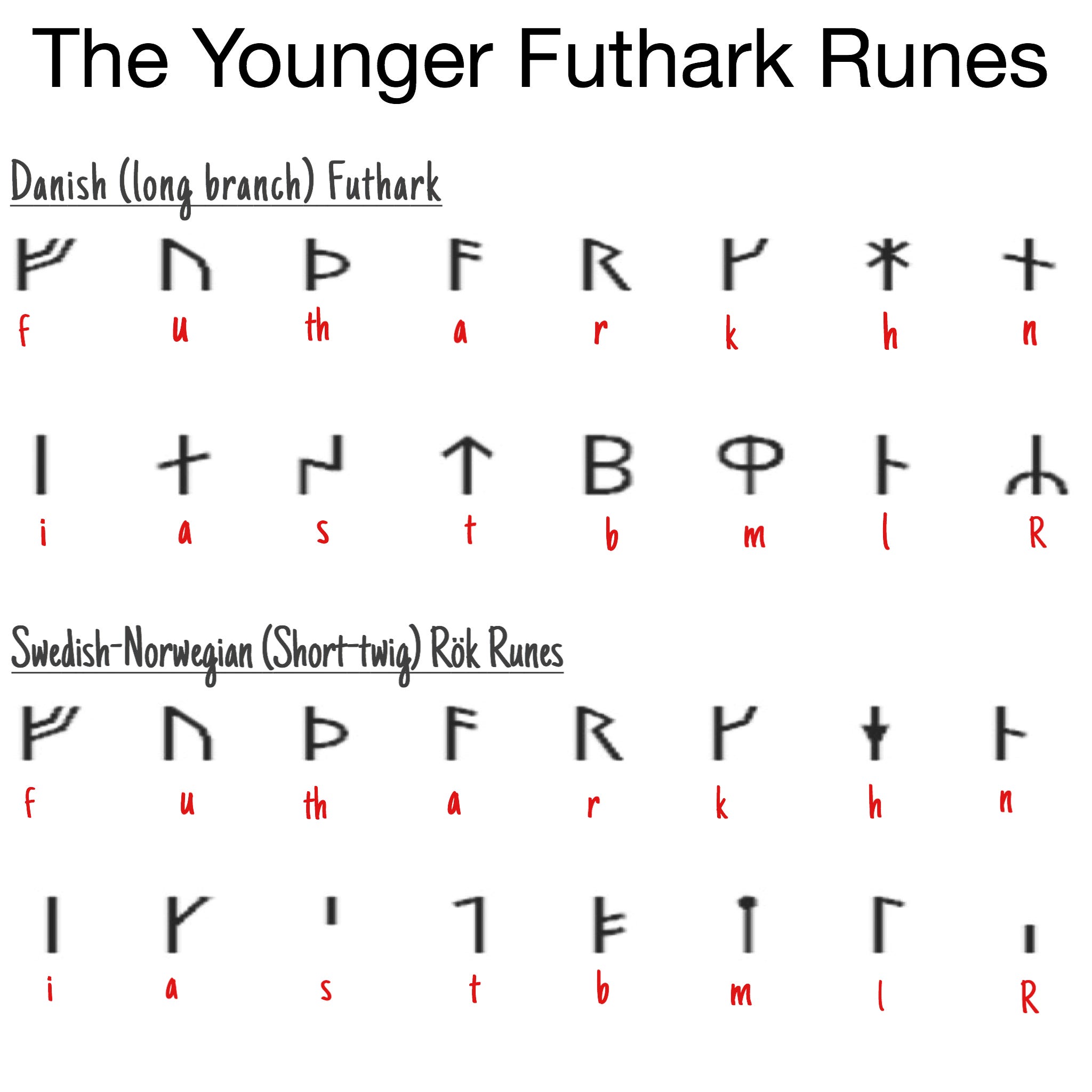
Which is related to the modern scholarly notion that Runes are simply letters, an alphabet, and nothing more.
Simple.
Baldur was simply beautiful, the most beautiful of the Aesir, or so it is said, yet despite his Dionysian beauty it is another who bears the most becoming feet. There is an old reference that the powerful Wolf-woman Skadi wanted Baldur as her man, and set about to gain her desire. Skadi was no Asa, that is for sure. A contest was arranged in which she would choose her husband, yet it was to be done by only gazing upon the bare feet of her prospects. The mighty lady lay her eyes upon the most beautiful feet she had ever seen, only to discover upon her choosing them, the gorgeous feet were the appendages not of Baldur, but of Njord!
What is beauty when coupled with desire?
What of desire when foiled by one's own misdecision?
What of those echoes of unquenchable forces that play creation like a violin?
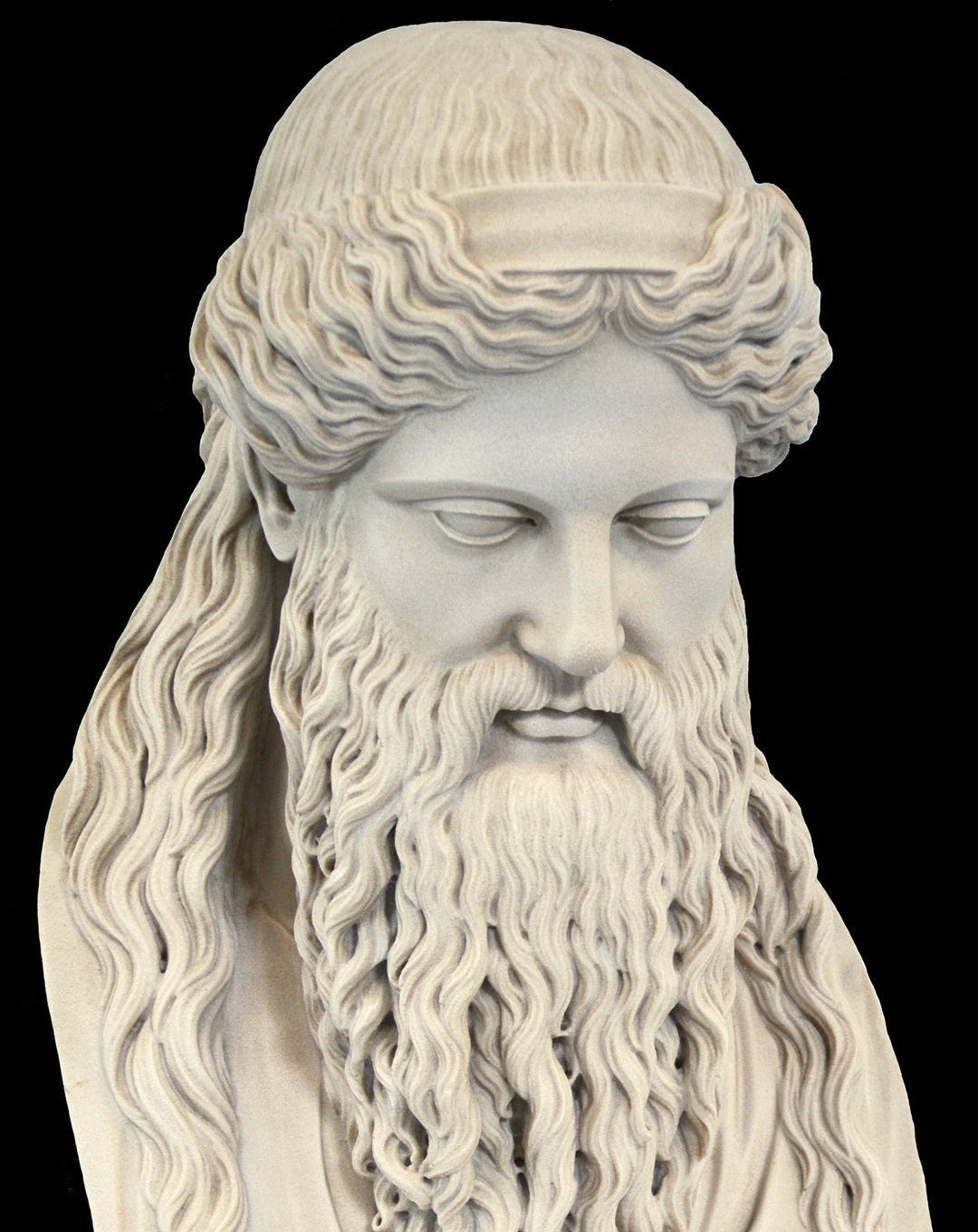
Whenever modern thinking returns to the old ways, inevitably such thinking revolves around psychology and time, the joy of light, night as its contrast, all in a congruent narrative. Thus the secret rites of Dionysus take place in the depths of darkness, which is fitting, as darkness is equated with terror and all things immaterial, while Baldur shines forth with an inner light, distinctively interpreted since the advent of Christianity as the halo, bright as day, an exalted and pure condition. To the casual glance the two appear to be unrelated, yet both have their histories directly shaped through untamed forces.
Baldur of the Oss, yet also a human prince, born of a mortal mother. In the old ways the warrior caste were the decision makers, the leaders. The aggressive will to battle! This is hard to comprehend for modern sensibilities, where duplicitous and spineless liars in buisness suits rule, yet it was true. The same men who were responsible for defense of the land were the ones who attended to the practical reality of maintaining society on a day to day basis.
Thus the need for composure and reason, which makes the madness and the passion, the lust for combat, the joy of the fight in Baldur all the more contradictory and distant. Baldur, ferociously ridden by passion, by the forces that drove him.
Baldur fell head over heels in love with the daring Nanna. He pined over the cascade of her hair, the glint in her eyes, the curve of her breasts. The problem was that Hother was in the picture, his rival, and Hother was better positioned in the matter.
Baldur the prince had Otherworld blessings. Fierce fighter who glowed in the warrior light, he was no mean opponent. Baldur the brave put his life on the line in his many battles. He won renown and respect, first in the fray. Hother was having the worst of it, despite being betrothed to Nanna, and so he too found his counsel amongst the good folk, and they opened the way for him into the Otherworld.
Far and away Hother traveled, with promise, the troth he was to deliver. There in the place where night is luminous, he acquired the weapon of weapons, the deadly sword who carried the name Mistletoe.
Mistletoe lept in his hand. A warrior's boon, a living being. Forged a billion years ago and tomorrow, before there was time and thereafter, Mistletoe traveled to the changing world of men to do battle once more.
Single combat in ancient times was rarely with quarter, especially in the ancient way when men battled over women. Say what you will about modern notions, the Elk and Deer still fight over their harems. The flash of blades driven by masters was swift and deadly, no eye could follow their gleaming glinting arcs, cracks of lightning, steel on steel in honour of great skill. Yet while Baldur's blade was honed by living masters, Mistletoe suffered no such limitations. Bitten deep was the prince, first in battle, he fell there to the keen edge of the Otherworld blade.
Hother and Mistletoe prevailed. Nanna was his, now without rival. Baldur, slain, was placed upon the pyre.
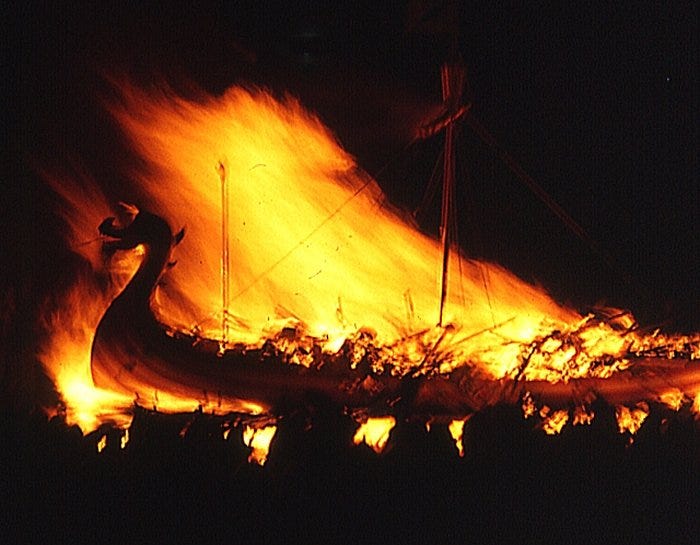
So imagine then, imagine with me the sweet contradiction between the love struck warrior and the beloved shining god. The modern mind balks at such questions, actually freezes, which is where cognitive dissonance arises.
Such a beautiful condition, one where if even for a moment the thoughts can create no narrative, rootless, unable to fulfill their function.
Watch how the thinking tries desperately to find something, anything to solve the dilemma, yet there is no solving of this opposition through the applied magic that is mental activity. Similar in action to Dionysian Maenads whose utter transformation cannot be held by the restrictive requirements of civilization, the mind must simply accept the schism, which opens the mystery.
The theories and propositions designed to mollify the opposition have all been stated numerous times. The ideas and all the angles have already been tried. The modern mind gives up and drifts off to other things, unable to achieve it's desire, when it should remain there in that place bereft of any solution, treasure the moment of suspension, floating above the void.
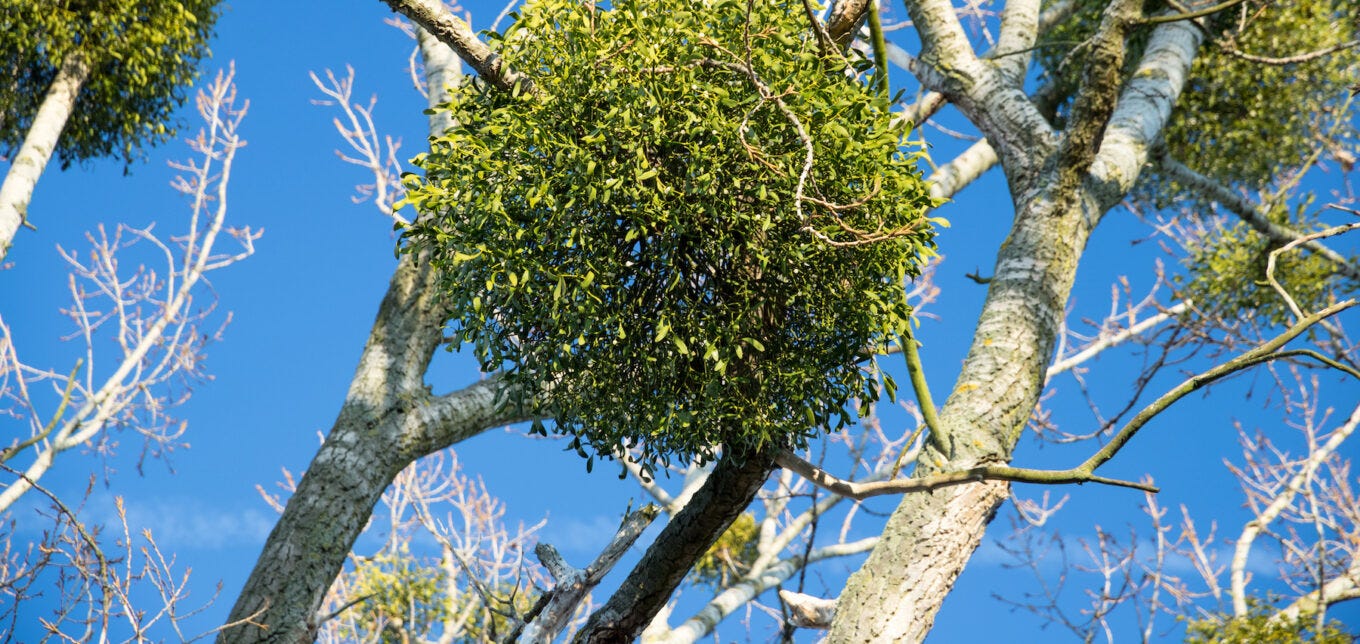
The ancient properties of Mistletoe are mostly forgotten today. Allopathic medicine rejects ancient knowledge, declaring itself superior, more advanced. What tinctures were used with this strange being whose roots never taste the earth? What were the compresses made? What songs were sung?
Mistletoe was closely connected to the Otherworld. That much is certain. There are stories from Old Sweden that during the Yule observation Mistletoe was strung along the walls and ceillings of the Halls where the people would gather.
Some say it was so placed due to its persistent green colour, yet so is the Pine which remains verdant all winter. Mistletoe was a weapon used in the vocabulary of the apothecary. Its properties included the ability to cure the jaundiced grip of dis-ease.
We are back into the unsolvable contradiction, where the soft and compliant condition seems to obviate the power to transform from the living to the dead.
Thus the key to Mistletoe being central to Yule, the power to move from one irrevocable condition to another, when the Runemasters would wait patiently for the New Moon that would begin the next calendar, the return of the cycle of life after the quiet and death of winter. It was at that time, when winters’ deep was the longest until the moon utterly died, that in between time, the liminal suspension betwixt what was and what isn’t yet, the floating above the void was viscerally known.
It is said that the practitioners of the Pythonic Arts, the Druids would make their pilgrimage to Alexandria and the Mediterranean. There they spoke and wrote in the classical language of the learned, Greek, yet when pressed to commit their knowledge to the page, they would smile and politely demure. Thus when Pelagius made his journey to Rome, with his desperate mission to bring some humanity and soul to Christianity, the road he traveled was already very old.
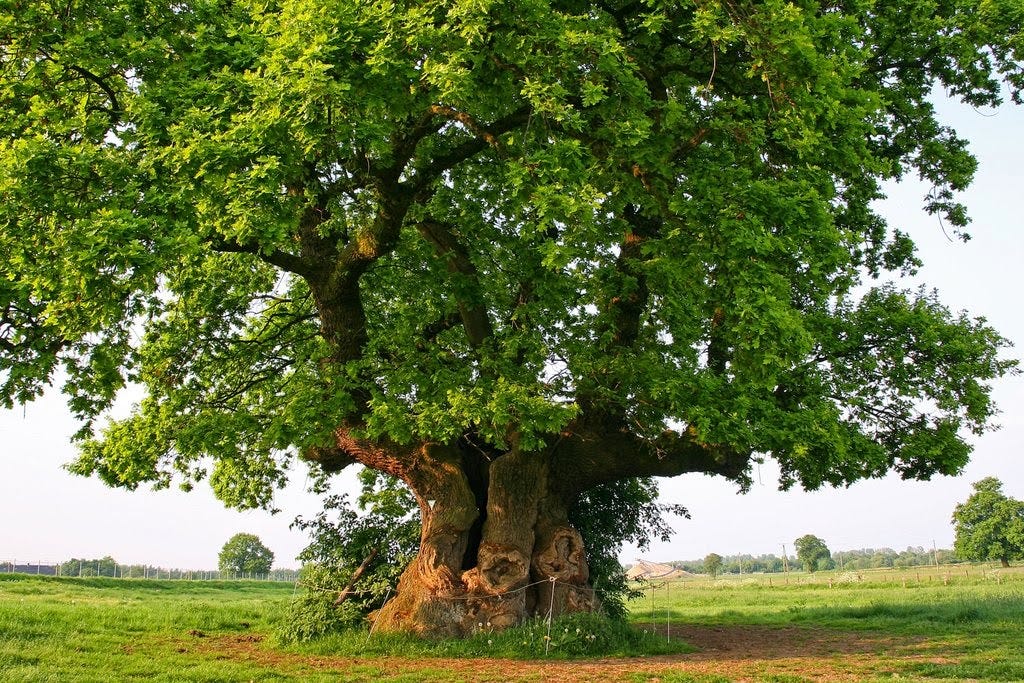
In ancient Greece, Mistletoe is know for general strengthening of the system, a method to return to vitality, and other applications which suggest it was widely employed. Those great oaks the strange plant grew upon were venerated in northern climes, the oak itself being a most mystical tree. It was the oak that held the magic properties, the sacrifices, cracked with lightning, blackened yet still living. It is said that somewhere in the ancient Gallic lands, in a forgotten corner, lives an ancient grove of oaks that still maintains this world.
The modern mind struggles with ancient reality because never can it place eternity.
If there is no concept, no embodied experience, no emotion, no desire then whatever might be left is simply relegated to non existence.
Thus the modern image of a fierce warrior, ignited in martial splendor, can never be transformed into a widely beloved gentle god, as the two are oppositional, apparently mutually exclusive states, the good light vs the evil dark. Yet both are bound together through Mistletoe, through love of the daring Nanna, and death which claims both the man and the god.
Forgotten in all of this is the nature of oppositions building a more complex reality. In myth and legend from Greece, Egypt, and the Northern Lands we discover in the play of opposing forces the root of manifestation.
Thus the yawning gap is fertilized through fire and ice to bring about the descending levels of hypostases. Thus Night brings forth the luminaries. Similarly it is Seth who provides the tension between civilization and chaos, and Dionysus who opens the human character to the void.
It is the void which holds them
In hands unreal,
Surreal.
Neither Baldur or Dionysus conquered death. All the promises of the world, the protection of incredible power, all the love and all the faith could not spare them.
The cycles of life all reflect from an invisible sources, and the gods so precious, so fascinating, so obtuse offend our temporal sensibilities by never living up to our expectations, our wishes and our fears.
The water still flows and the wind still blows despite the manipulations of men who would replace the gods with themselves. The fantasies of power for those who can never taste the strange recombination of resurrection are all the more strident and all the more psychotic for the limits they cannot transcend.
Who remembers the lessons of manifestation, that the fatalistic beginning of any cycle already prophecies its end. The tryst between god and man is not available for dissection, nor can mice understand the flash of their nervous systems even when they are already dead. Thirty seconds as it is measured, thirty seconds of rainbow crescendo activity, firing on all cylinders despite their heads being severed.
The final flash before total neurological silence is also observed in people. Amongst researchers and pundits the speculation is rich, and without a rudder. Materialists have rushed in gesticulating wildly, screaming that it explains the near death experience.
Not one of the very well paid experts considers that the desert sunset so often explodes into mauves and golds before vanishing completely into the twilight.
Death then occurs in light.
The night that becomes the reflector, allows in the darkness a certain sight to come clear, like that which is ignited when gazing into the Black Mirror.
Into the Black Mirror
The gaze of the skryer
Flecks of magnetic metal
Sings the inner eye.
Some things can only be
Seen and known
When the veil of the world
Is suspended.
Frankly I've only read Snorri Sturluson's bullshit Christian tainted prose edda account that blames Loki for Baldur's death, but I know in Baldur’s Draumar it is Baldur’s twin brother Höðr that is predicted to kill Baldur with no help from Loki at all. This account makes far more sense than Loki tricking a blind and stupid Höðr into doing his dirty work. In the poetic Edda both Baldur and Höðr are resurrected in Gimel after Ragnarök.
2026. Torchi The Red Fire Horse Says : Thank You Always.
https://thumbs.dreamstime.com/z/red-fire-horse-symbol-according-to-eastern-calendar-324270157.jpg